904-850-8900 Direct to Jerel (Owner)

"They Wanted the Full Price, Not a Cash Discount" — Seller-Financed Mobile Home, Duval County

Duval County. A 1959 mobile home on its own land, sold as-is. Purchase price $100,000 — $5,000 down and $95,000 carried by the seller at 0% interest. No commission, no repair credits, no price cut.

Serving Jacksonville + surrounding areas — Fernandina, Yulee, Orange Park, St. Augustine, Palatka, and nearby.
Mobile home
Seller financing
Pre-1976
As-is
Option 1: Net Cash Number (In Writing) As-is. We'll show what you'd actually pocket after typical costs and payoffs.
Option 2: Higher-Price Terms (In Writing) Higher price than cash — put in writing and attorney-closed.
Option 3: List vs. Sell "Truth Check" Comparison of listing net vs. selling as-is today.
Real Case — Seller-Financed, Duval County

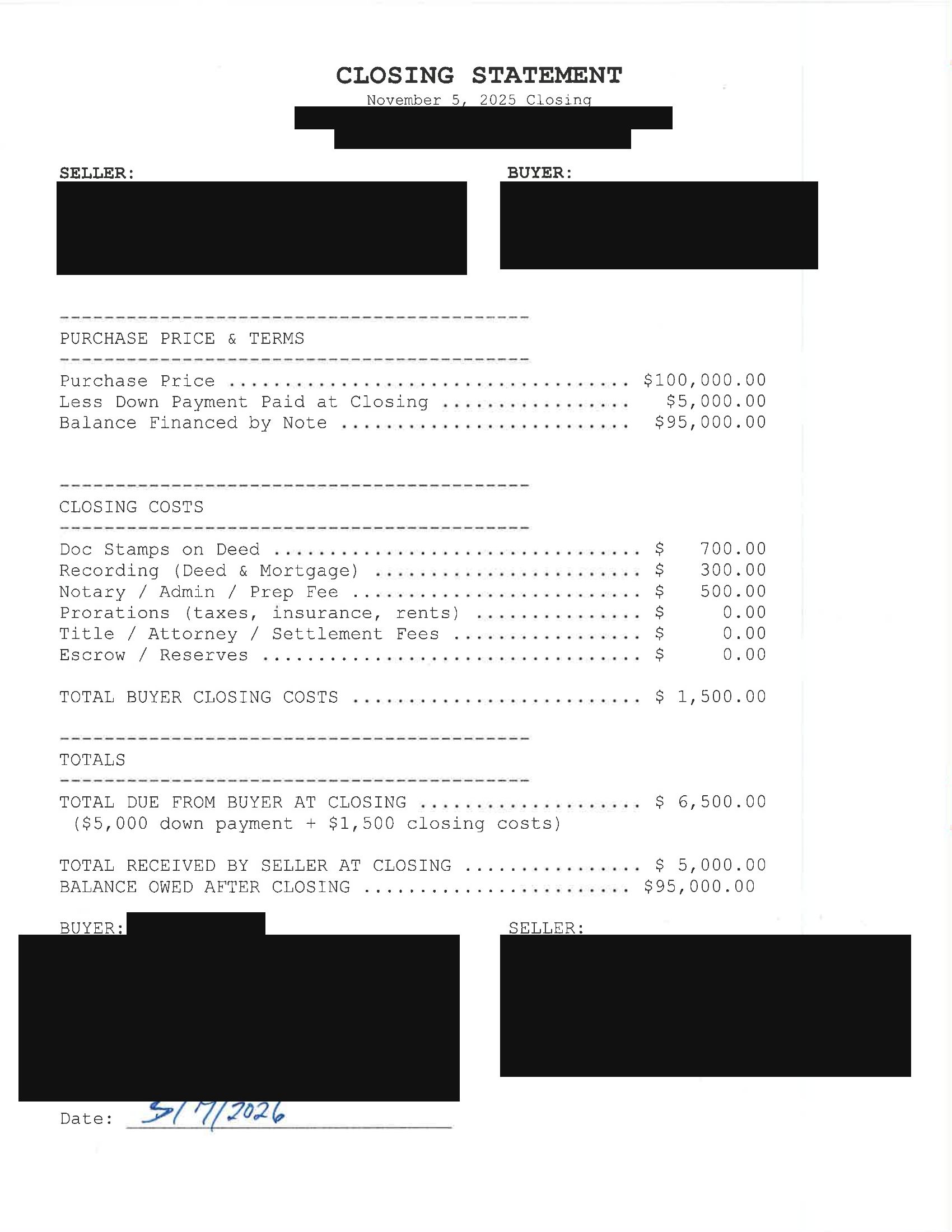
The seller didn't want a discounted cash number. We paid $100,000 — $5,000 at closing and $500 a month at zero interest, secured by a mortgage on the property — and took the home as-is.

See the redacted closing statement →

Get Your 3 Options
We reply fast: initial email review in 1–2 hours. No obligation.

What's the main situation?

The Situation

A 1959 mobile home has almost no financeable buyer pool.

Built before the HUD code

The home dates to 1959 — seventeen years before the federal HUD code for manufactured housing took effect on June 15, 1976. Homes built before that date can't be financed by conventional, FHA, or VA lenders. That removes almost every retail buyer from the table before the property is ever listed.

Cash is always a discount on a property like this

When the only buyers are cash buyers, the price gets set by what a cash buyer can do with it after repairs — not by what the property is worth to someone who can wait. A seller who wants full value rarely gets it in a cash sale, and there's nothing dishonest about that. It's just what cash costs.

What made a different structure possible

The seller didn't need the entire amount on closing day. That single fact is what opens up terms — and it's the question almost no buyer bothers to ask.

What We Did

Paid the price. Changed the timing.

$5,000 down, $95,000 carried by the seller

The purchase price was $100,000. Five thousand of it was paid at closing; the other ninety-five thousand became a promissory note held by the seller, secured by a purchase money mortgage on the property. All three lines are at the top of the redacted statement.

$500 a month at 0% interest

The note pays $500 a month for 190 months at zero interest — $95,000 exactly, paid in full over time, with nothing added on top. Those were the terms both sides signed. Most seller-carried notes do charge interest; every one of these is negotiated separately.

No title fee, no settlement fee, no prorations

Look at the closing costs block on the statement. Title, attorney, and settlement fees: $0.00. Prorations: $0.00. Escrow and reserves: $0.00. Total closing costs were $1,500 — doc stamps on the deed, recording for the deed and mortgage, and the preparation and notary fee — and the buyer paid all of it. This one closed directly between the two parties rather than through a title company, which is why those lines read zero.

Signed and notarized, not a handshake

Deed, promissory note, and purchase money mortgage were all executed and notarized, and the recording cost for the deed and mortgage was paid at closing. On a terms deal the paperwork is the seller's protection — it should never be informal.

The Result

The seller got their number. We got the condition.

What the seller got

One hundred thousand dollars — not a discounted cash figure. There's no commission line on the statement, no repair credit, no as-is price cut, no inspection renegotiation. Five thousand at closing, then $500 a month secured by the property itself.

What we took on

A 1959 home with real deferred maintenance. The first work order after closing was electrical — outlets, GFCIs, switches, wire. That's the trade: the seller stops owning the problems on closing day, and we start.

Why it's here

Every seller we talk to gets a cash number and a terms number. This is what the terms number looks like when it's actually signed — on paper, with the closing statement to match.

If This Sounds Like You

Most Investors Only Give One Option. We Give Three.

Because every situation is different. Sometimes you need speed, sometimes you need the most money.

Best for Speed

Net Cash Offer

A guaranteed cash price. We typically cover all standard closing costs. We buy as-is. You pick the closing date.

  • Closes in as little as 10–14 days
  • No repairs needed
Best for Max Value

Terms (Higher Price)

We pay you a higher purchase price in exchange for paying over time (monthly). Everything secured by attorneys.

  • Beats the "Cash" price
  • Monthly income potential
The Truth Check

Market Comparison

We calculate what you'd net if you listed with an agent (minus commissions/fees). If listing is better, we'll tell you.

  • Transparent math
  • No pressure guidance
Real Closings — Redacted HUD Proof

We Don't Just Promise Solutions. We Prove Them.

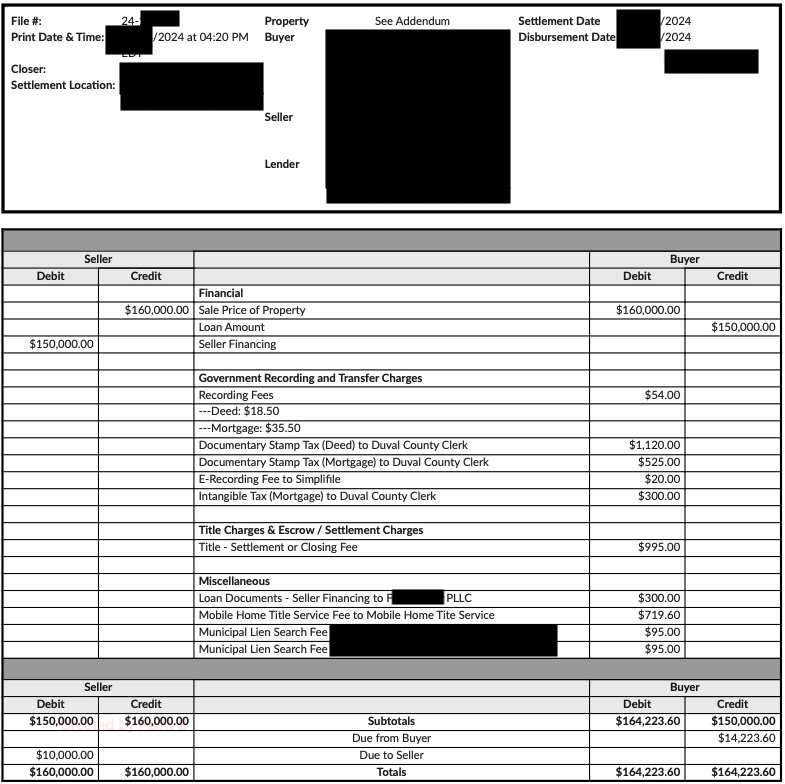
Each card shows a real situation we solved — with a redacted closing statement you can review. Look for "Due to Seller" on the HUD.

InheritanceTenantsCode Issue
"She feared losing her water."
Situation
Inherited mobile home. Tenant trashed it. Shared well + code restrictions blocked a normal sale.
What we did
Structured a plan that protected her living situation and water rights.
Result
Clean closing with net proceeds in hand — no panic decisions.
LandlordTenantsRepairs
"She wanted out — without hurting tenants."
Situation
Burned-out landlord. Repairs needed. Didn't want to displace tenants or manage contractors.
What we did
Presented cash and terms options. Committed to keep tenants in place short-term.
Result
Sold without showings, repairs, or tenant chaos.
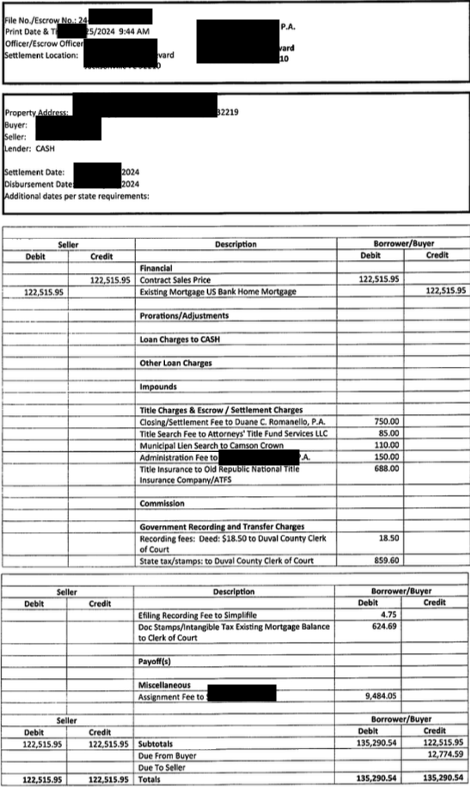
Late PaymentsLienRepairs
"She was upside down and stuck."
Situation
Behind on payments. Code lien. Would've needed cash to close a traditional sale.
What we did
Took over the existing mortgage and covered closing costs — no out-of-pocket for her.
Result
She walked away without bringing a check to closing.
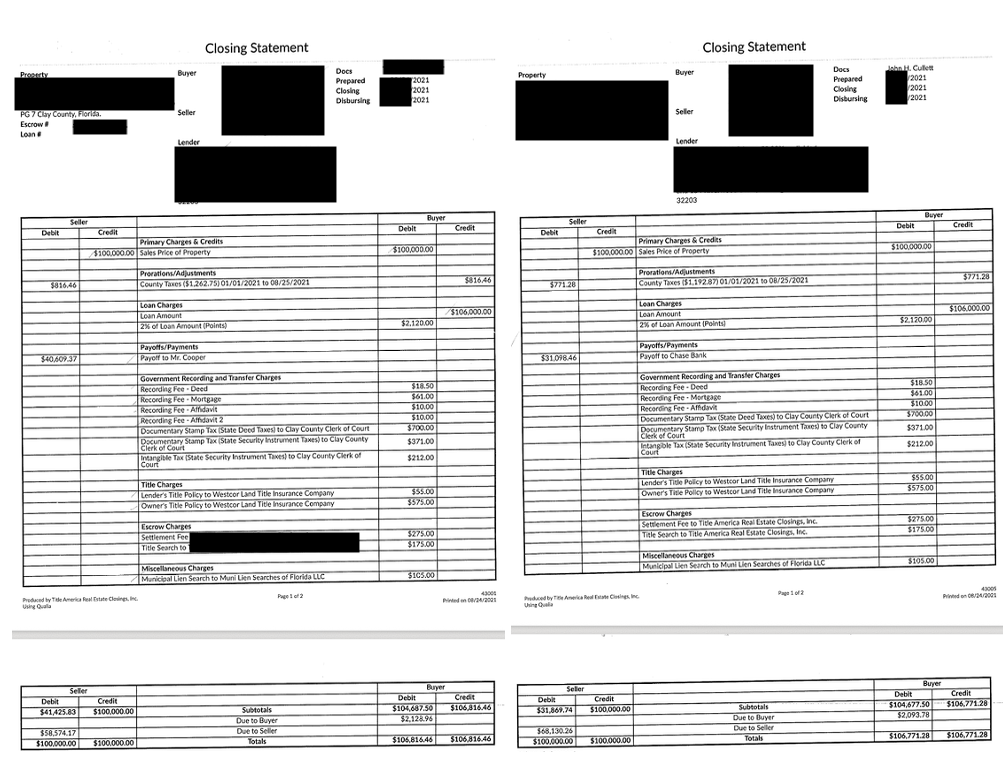
Mobile HomeSeller FinancingAs-Is
"They wanted full price, not a cash discount."
Situation
1959 mobile home on its own land. Too old for any lender, which caps what a cash sale can pay.
What we did
Paid the full $100,000 price — $5,000 down and $95,000 carried by the seller at 0% interest.
Result
Full price instead of a cash discount, plus $500 a month secured by the property.

📁 Full redacted closing statements available on request. Three of these closed through a Florida real estate attorney; the seller-financed purchase closed directly between the two parties.

Straight Answers — No Runaround

Because the cash price is lower. A cash buyer prices in repairs, holding costs, and risk. If you don't need every dollar on closing day, carrying part of the price usually gets you a bigger number overall. If you do need it all at once, take the cash — we'll tell you which one is actually better for you.
No. Most seller-carried notes charge interest. This one didn't, because that's what the two sides agreed to. Interest rate, down payment, and length of the note are all negotiable on every deal.
The note is secured by a mortgage against the property. If the payments stop, the seller has a claim on the property itself. That's why the mortgage gets recorded, and why the paperwork matters more on a terms deal than on a cash one.
Yes. Pre-HUD-code homes are one of the main reasons a Northeast Florida property won't sell conventionally, and they're a normal part of what we buy — on owned land or on a rented lot.

⚠️ The mortgage doesn't pause while you negotiate.
Get one written number — cash and terms — that both sides can verify.
No obligation to accept. No cost to either party.
Get a Number Both Sides Can See
📞 Call Jerel Get My 3 Options